Case Study: FCP x docu tools
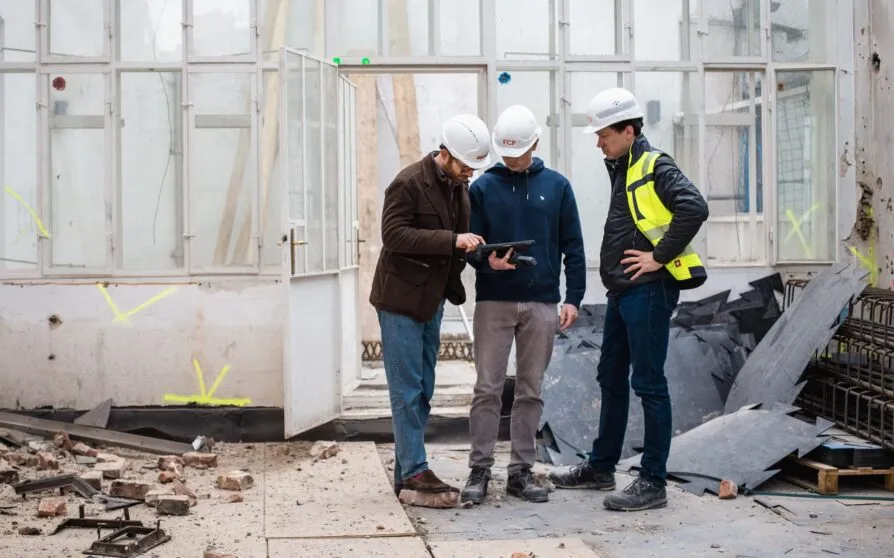

The bulk of our work with docu tools involves ongoing construction site documentation. We regularly track construction progress, document work in detail, and thereby establish a solid foundation for the entire project.
Christian Kunitz, B.S. in Engineering
Head of Local Building Inspection
Large-scale digital construction site documentation:
How FCP uses docu tools to accurately document construction progress
Executive Summary: Digital Documentation for Complex Infrastructure and Building Construction Projects
FCP Fritsch, Chiari & Partner ZT GmbH is one of Europe’s leading civil engineering firms. Headquartered in Vienna, the company employs approximately 400 people and has offices in several European countries. It also carries out projects worldwide, including in Europe and North and South America. A key area of its work is on-site construction supervision for complex building and infrastructure projects. The focus is increasingly on the renovation and modernization of existing buildings, supplemented by new construction and infrastructure projects. For over a decade, FCP has relied on docu tools for digital construction site documentation. The software has been used in projects since 2013, making the company one of its long-standing users.
“docu tools was one of the first providers at the time to make this type of digital construction site documentation possible. We have been using it continuously ever since and are continuing to refine our processes accordingly,” says Christian Kunitz, Bmstr. Dipl.-Ing., Head of Local Building Inspection, FCP.
Systematic construction site documentation instead of sporadic recording
The primary focus of FCP’s use is clearly on performance assessment and the ongoing documentation of construction progress, as well as the recording and tracking of defects. These tasks account for approximately 80 percent of docu tools usage. In this process, defined areas of a construction site are regularly documented, usually at weekly or monthly intervals. The goal is to provide a clear record of changes and progress over extended periods of time.
“We use standardized pins for specific areas or components. These are updated regularly, allowing us to document a clear chronological progression without creating a confusing jumble of pins,” explains Christian Kunitz. This structured approach makes it possible to track construction progress in a transparent manner and to refer back to specific construction stages with precision, even years later.
An important foundation for the warranty and subsequent project phases
Another key benefit lies in the long-term documentation of building components that will no longer be visible once construction is complete. Particularly in complex construction projects, local building authorities often remain involved in the project even after construction has been completed, for example during handover procedures or during the warranty period.
“If, years later, we need to determine how a component was originally constructed, comprehensive photographic documentation from the construction period is extremely valuable,” emphasizes Christian Kunitz. As a result, documentation using docu tools not only ensures transparency throughout the entire construction phase but also provides an important foundation for future assessments and decisions.
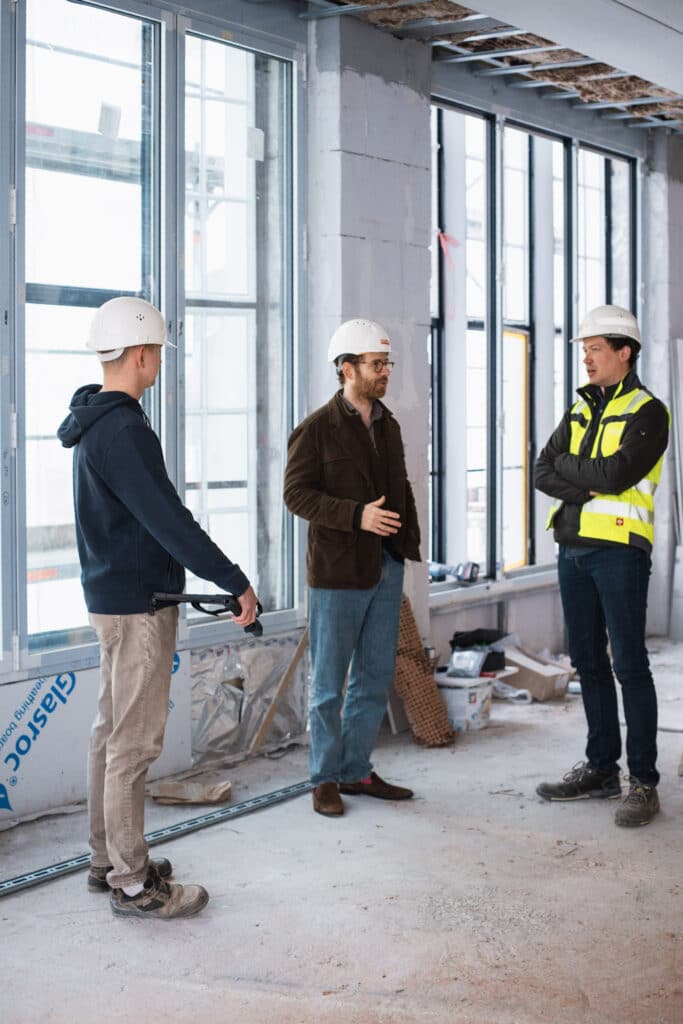
360-degree images fill gaps in documentation
A key development milestone was the integration of 360-degree photo documentation.
FCP was involved in the practical testing of this feature from an early stage and contributed specific requirements drawn from everyday construction site operations to its further development. The reason is simple: In traditional construction site documentation, the problem often arises that the very perspective needed later is missing. “On construction sites, the saying often holds true: ‘The picture you need later is the one you didn’t take back then,’” says Christian Kunitz.
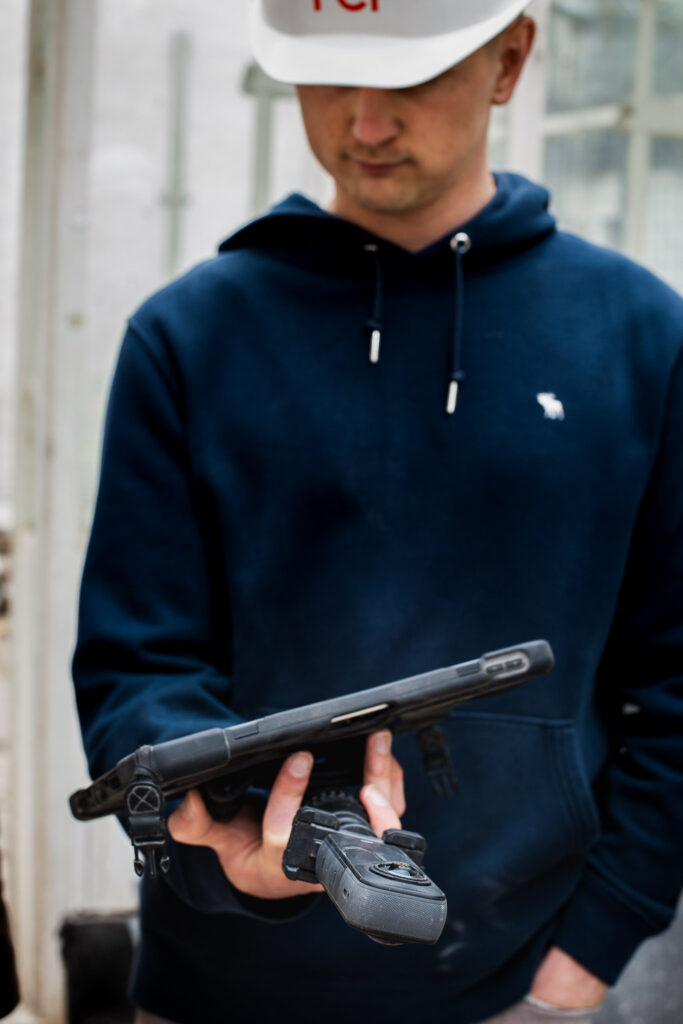
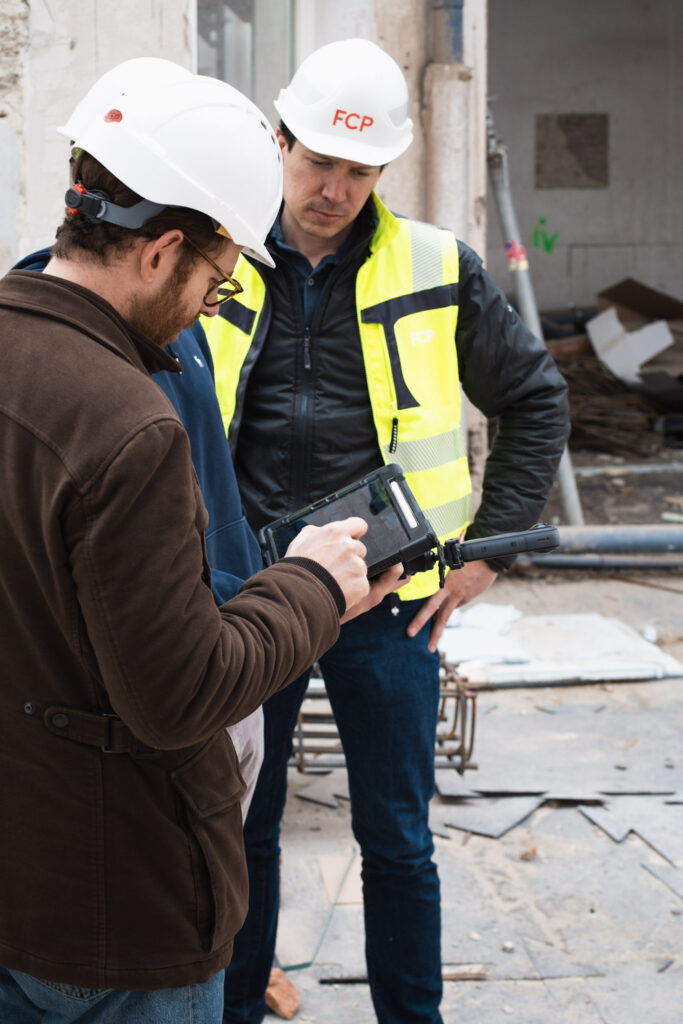
The 360-degree documentation solution from docu tools solves this problem. A room is fully captured and can later be viewed from any angle. To do this, an employee systematically documents the construction site once a week, consistently capturing the same rooms or areas. This creates a clear timeline of the construction site’s progress.
In addition to providing a clearer overview, this method also saves a significant amount of time.
“With the 360-degree camera, we can move through the construction site much faster while also capturing more comprehensive documentation,” says Lukas Rauchlatner, a power user on the FCP team.
A tool for all your daily construction site needs
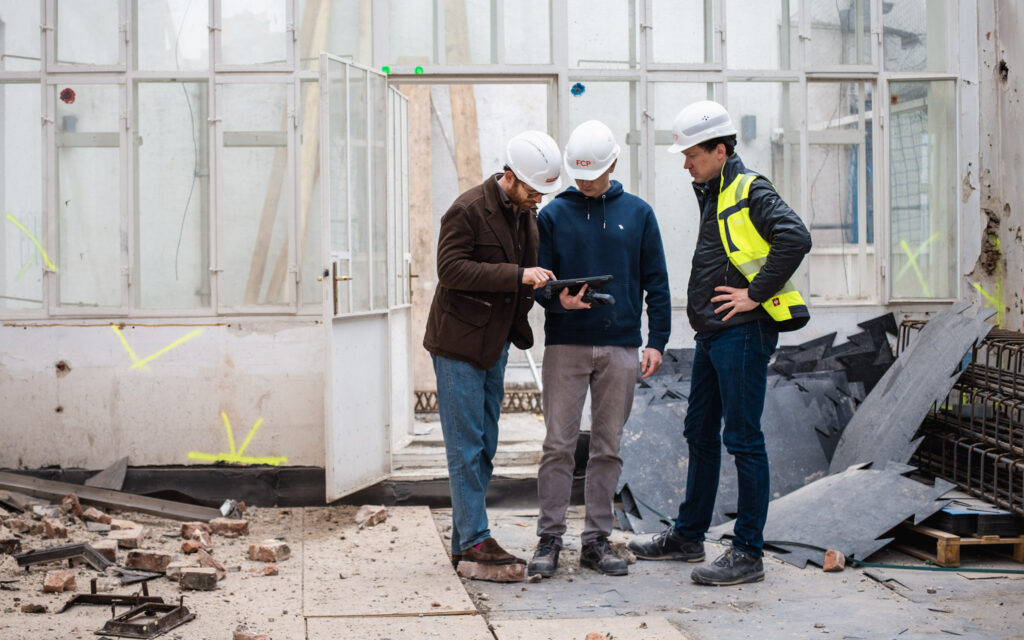
A key factor in the widespread use of docu tools within the team is its ease of use. New employees can start working with the system very quickly. “Even our interns are given a tablet and are able to carry out documentation tasks on their own after just a short time,” says Christian Kunitz. The system is used by everyone from young employees to highly experienced colleagues.
In day-to-day project work, docu tools has established itself as a reliable tool at FCP. The software is firmly integrated into our workflows and supports our teams where it adds the most value in their daily work.
Our long-standing partnership speaks for itself; “We’ve been working with docu tools for many years and are very satisfied. The application is practical, reliable, and precisely tailored to our needs. Wherever we can influence the decision, we use docu tools and actively recommend it to others, ” summarizes Christian Kunitz.
About FCP Fritsch, Chiari & Partner ZT GmbH
FCP Fritsch, Chiari& Partner ZT GmbHis an internationally active civil engineering firm headquartered in Vienna. Approximately 400 employees work on projects in the fields of building construction, infrastructure, and transportation. The company manages projects throughout Europe and worldwide.
Clients include public institutions, infrastructure operators, and private developers, among others.
The most frequently used functions of docu tools
- Construction site documentation
- Assessment of Achievement
- Photographic documentation and map location
- Defect Tracking and Task Tracking
- report generation
Facts, figures, and data about the project:
| Industry: | Planning, Construction, Architecture, Civil Engineering |
| Project duration: | Since 2013 |
| Company headquarters: | Vienna, Austria |
| Locations | both nationally and internationally |
| Number of employees: | about 400 |
| Number of projects: | 193 |
| Number of pins | 8836 |
| Number of tasks | 35321 |
| Number of plans: | 8836 |
| Number of reports: | 7224 |
| Features used: | Construction Site Documentation and Work Verification 360-Degree Photo Documentation Defect Management for Warranty Claims & Project Inspection |
| Sample projects: | Althan Quartier Mariahilferstraße 10 DC Flats Academy of Fine Arts Austria Campus St. Josef Hospital Schönbrunn Arrival Center Rudolfinerhaus Allee der Kosmonauten Berlin and many more |
| Using docu tools since: | 2013 |
| Areas of application: | On-site construction supervision for complex building and infrastructure projects, renovations |
| Estimated time saved: | about 50 percent |