Digitales Mängelmanagement: Warum der einfache Weg oft der beste ist – und wie wir ihn mit docu tools möglich machen
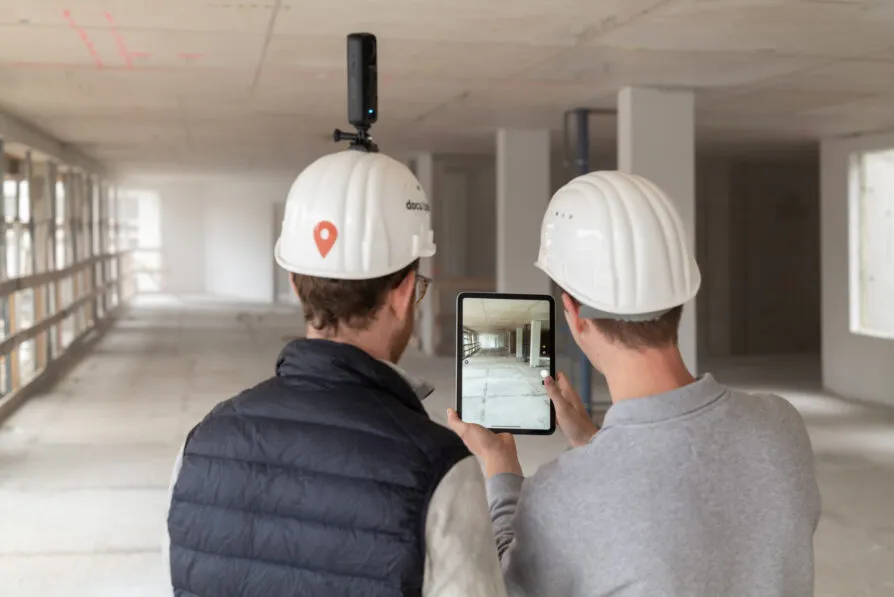
Wer schon einmal versucht hat, Mängel auf der Baustelle mit Excel-Listen, WhatsApp-Fotos, E-Mail-Ketten und verschiedenen Dateiversionen zu managen, kennt das Gefühl: Irgendwann ist Schluss. Informationen verschwinden, Zuständigkeiten sind unklar, Fristen verstreichen – und plötzlich wird aus einem einfachen Mangel ein echtes Problem.
Gleichzeitig sind viele digitale Lösungen am Markt zwar beeindruckend umfangreich, aber auch beeindruckend überladen: Bauzeitenplanung, Ressourcenmanagement, Vergabetools, komplexe Rechte-Strukturen.
Klingt gut – bis man es im Alltag wirklich braucht.
Denn für das Mängelmanagement bedeutet das vor allem eines:
zu viele Klicks, zu viel Komplexität, zu viel Zeitverlust.
Zwischen diesen beiden Extremen – dem Chaos auf der einen Seite und der Überfrachtung auf der anderen – fehlt etwas Entscheidendes:
Eine einfache, klare, reine Mängelmanagement-Lösung.
Genau deshalb gibt es docu tools.
Was ist Mängelmanagement – und warum scheitert es in der Praxis so oft?
Mängelmanagement umfasst im Kern fünf Schritte:
- 1. Mängel erkennen
- 2. Mängel dokumentieren
- 3. Verantwortliche zuweisen
- 4. Fristen setzen
- 5. Erledigungen sauber nachverfolgen
So simpel klingt das. In der Realität scheitert es jedoch daran, dass der Prozess nicht durchgängig, nicht zentral und nicht strukturiert ist.
Warum klassische Methoden scheitern: Excel, WhatsApp und E-Mail
Viele Projekte beginnen mit pragmatischen Low-Budget-Lösungen – die spätestens ab 30–50 Mängeln unkontrollierbar werden:
1. Informationen liegen überall
Fotos am Handy, Excel am Laptop, Notizen auf Papier, Statusupdates per E-Mail.
2. Keine einheitliche Struktur
Jedes Gewerk liefert anders, jeder Bauleiter dokumentiert anders.
3. Keine Nachvollziehbarkeit
Wer hat wann was gesagt? Welche Frist galt?
Oft kaum rekonstruierbar.
4. Hoher Zeitaufwand
Berichte müssen händisch erstellt werden.
5. Keine Kontrolle
Fristen gehen unter, Verantwortliche werden nicht erinnert.
Kurz gesagt:
Excel und WhatsApp funktionieren – bis sie es nicht mehr tun.
Warum viele digitale Lösungen nicht besser sind
Auf der anderen Seite stehen umfangreiche Software-Pakete, die „alles“ können:
Planmanagement, BIM, Dokumentenablage, Ressourcen, Kalender – und irgendwo darin ein Mängelmanagement-Modul.
Das Problem:
- Zu komplex: Für eine einfache Aufgabe braucht man zwanzig Klicks.
- Zu teuer: Man bezahlt viele Funktionen, die man nie braucht.
- Fehlender Fokus: Mängelmanagement ist oft nur ein Nebenschauplatz. Die Tiefe und Detailgenauigkeit fehlen – gerade dort, wo sie entscheidend wären.
Das Ergebnis: Für ein so kritisches Thema wie Mängelmanagement bleibt eine echte Lücke.
Wie docu tools Mängelmanagement löst – ohne die Komplexität traditioneller Software
Wir haben docu tools nicht entwickelt, um „alles“ zu können, sondern um das Wichtige perfekt zu können. Unser Mängelprozess ist klar, strukturiert, schnell – und speziell für die Praxis gebaut.
Hier die Funktionen, die in vielen Systemen fehlen, aber in der Realität entscheidend sind:
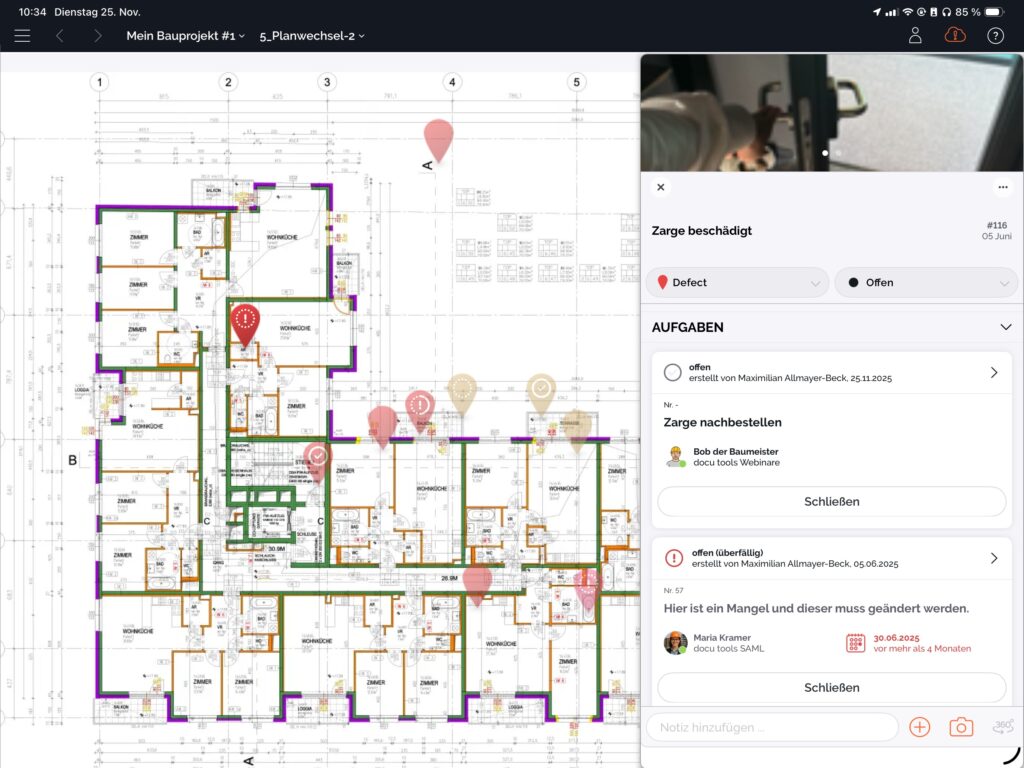
1. Eine Markierung am Plan – mehrere Aufgaben im selben Kontext
Statt fünf Markierungen am selben Ort zu setzen, gibt es bei uns:
- 1 Pin = der Kontext
- mehrere Aufgaben = konkrete Mängel
Das bedeutet:
- weniger Chaos
- klarere Übersichten
- saubere Struktur für Bauaufsicht, GU und NU
Ein wesentlicher Unterschied zu vielen anderen Tools.
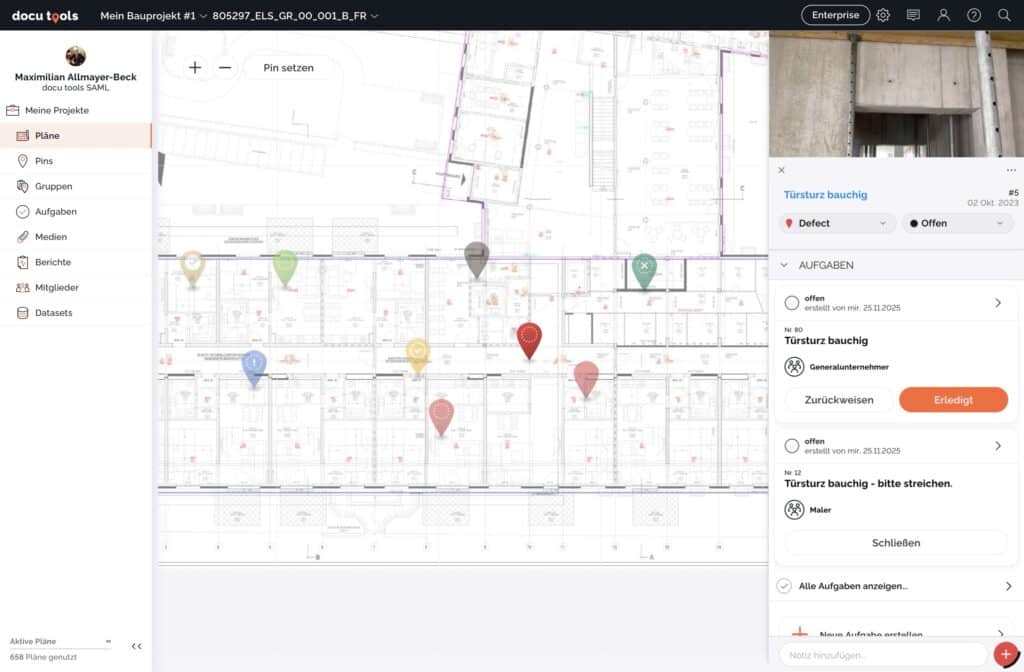
2. Der echte Bau-Workflow: Bauaufsicht → GU → NU → GU → Bauaufsicht
Der Standardworkflow in der Baubranche – von vielen Systemen nicht abbildbar, von uns aber sauber unterstützt.
Beispiel:
- 1. Bauaufsicht erstellt Pin + Aufgabe, weist sie dem GU zu.
- 2. GU prüft und erstellt im selben Pin eine zweite Aufgabe.
- 3. Diese wird dem NU zugewiesen.
- 4. Der NU erledigt und meldet an den GU zurück.
- 5. Der GU kontrolliert und meldet erst dann an die Bauaufsicht.
Ergebnis:
- klare Verantwortlichkeiten
- echte Kontrolle
- vollständige Transparenz
- alles in einem Pin dokumentiert
- revisionssicher gespeicherte Historie
Genau deshalb schätzen Generalunternehmer docu tools besonders.
3. Teams – weil Projekte nicht aus Einzelpersonen bestehen
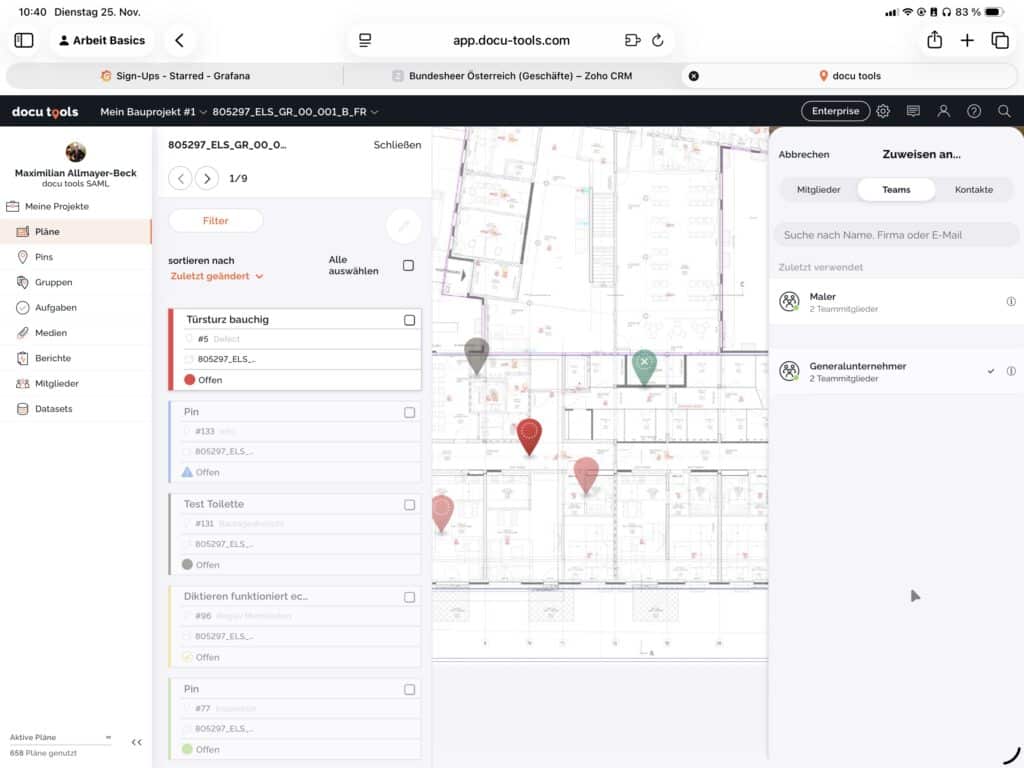
Wir ermöglichen, mehrere Personen zu einem Team zusammenzufassen:
- Aufgaben können einem Team zugewiesen werden
- alle Teammitglieder sehen dieselben Aufgaben
- jeder kann Mängel dokumentieren und erledigen
Gerade bei größeren Projekten ein enormer Vorteil.

4. Geschwindigkeit: Einen Mangel in rund 10 Klicks erfassen
Klingt banal – ist aber im Alltag entscheidend.
Für einen vollständigen Mangel benötigen wir rund zehn Klicks:
- Pin setzen
- Titel
- Beschreibung
- Gewerk
- Verantwortlicher
- Fälligkeit
- Foto(s)
Wenn man am Tag 60 oder mehr Punkte dokumentieren muss, macht jedes zusätzliche Klickpaar einen Unterschied – besonders bei Begehungen mit Bauherr und Subunternehmer.
5. Revisionssicherheit: Bei uns kann nichts gelöscht werden
Ein Mangelverlauf ist ein jurischer Nachweis. Deshalb gilt bei uns:
- Pins können nicht gelöscht werden
- Aufgaben können nicht gelöscht werden
- jede Änderung ist nachvollziehbar
- jeder Schritt hat einen Zeitstempel
Das sorgt für maximale Rechtssicherheit – ohne Interpretationsspielraum.
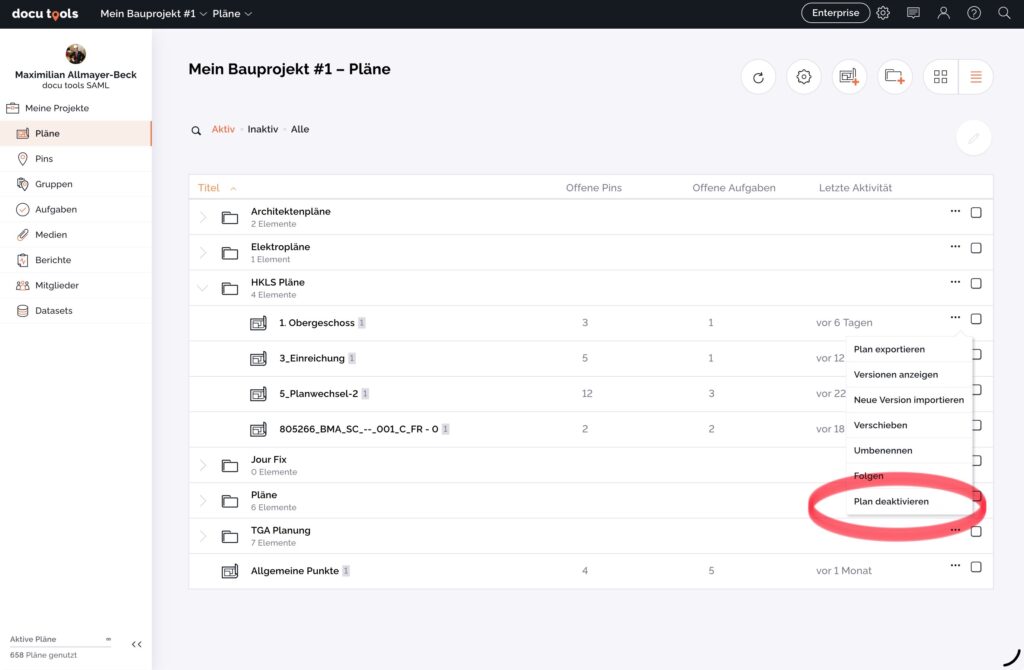
6. Digitaler Prozess + Hybrid-Prozess – beides möglich
Nicht jeder Subunternehmer arbeitet gerne digital – deshalb unterstützen wir beide Welten:
Digitale Mitglieder
- arbeiten direkt in der Software
- sehen ihre Aufgaben
- melden digital frei
- laden Fotos hoch
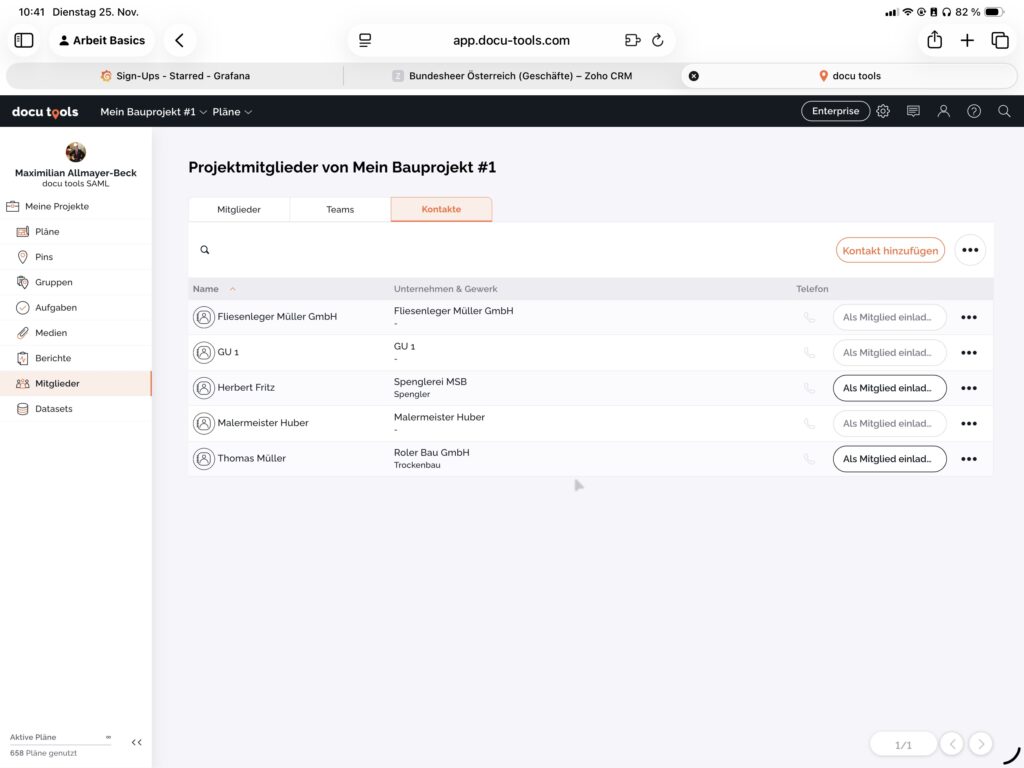
Kontakte (ohne Login)
- bekommen Aufgaben über Berichte
- Berichte können per Link geteilt werden
- Kontakte können jederzeit später in Mitglieder umgewandelt werden
So bleibt jeder flexibel – besonders in frühen Projektphasen.
7. Benutzerdefinierte Berichtsvorlagen
Ein Mangelbericht muss oft rechtliche Anforderungen erfüllen – zum Beispiel VOB-Bezug in Deutschland.
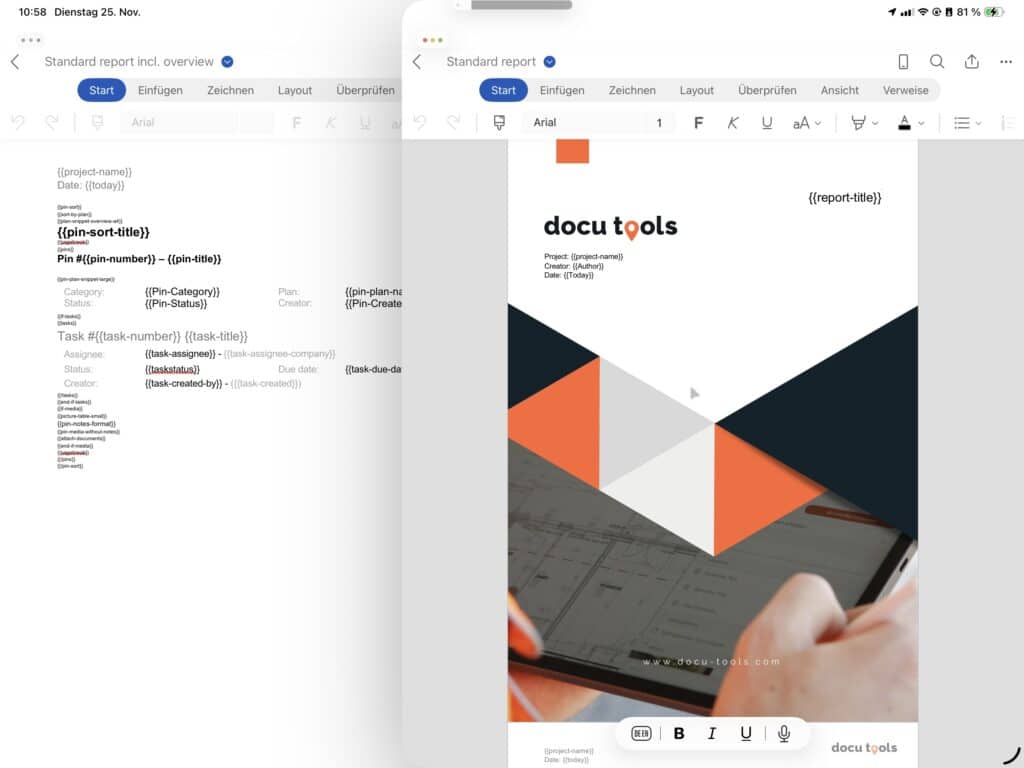
Bei docu tools können Berichtsvorlagen über Word und Excel frei gestaltet werden:
- Titelseiten
- Layout
- Kopf- und Fußzeilen
- CI-Design
- variable Felder
- strukturierte Inhalte aus Pins
Damit sind Sie bei Mängelberichten immer rechtlich sicher und optisch professionell unterwegs.
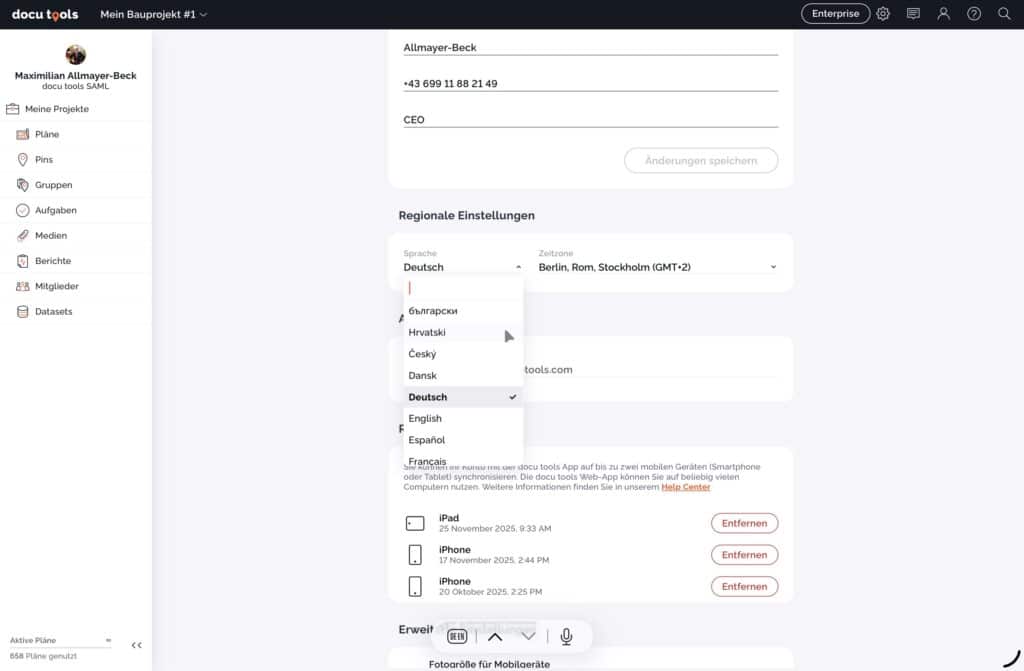
8. International einsetzbar – ein Mängelprozess, der überall funktioniert
docu tools wird heute in Deutschland, Österreich, der Schweiz, Polen und vielen weiteren Ländern eingesetzt.
Der Grund ist einfach: Unser Mängelprozess basiert nicht auf nationalen Normen, sondern auf Logik.
Durch frei gestaltbare Berichtsvorlagen, flexible Aufgabenstrukturen und die klare Pin-Logik lässt sich docu tools in jedem Land exakt an die lokalen Anforderungen anpassen – egal ob:
- VOB in Deutschland
- ÖNORM in Österreich
- kundenspezifische Vorgaben in Polen
- internationale Projektstandards
Oder komplett eigene Layouts, die nur für ein bestimmtes Unternehmen gelten.
Damit funktioniert docu tools überall dort, wo Mängel erfasst, kommuniziert und nachverfolgt werden müssen – unabhängig von Sprache, Dokumentationskultur oder rechtlichen Anforderungen.
Warum docu tools anders ist
Wir sagen nicht „wir sind besser“.
Wir sagen: Wir konzentrieren uns auf das Wesentliche – das Mängelmanagement.
Während andere Tools:
- 40 Funktionen haben, die niemand nutzt
- komplexe Schulungen erfordern
- Subunternehmer überfordern
- teuer sind
- langsam zu bedienen sind
setzen wir auf:
- Einfachheit
- Geschwindigkeit
- Flexibilität
- rechtssichere Dokumentation
- klare Zusammenarbeit (Mitglieder + Kontakte)
Das macht uns nicht größer, sondern zielgerichteter. Und genau das ist unsere Stärke.
Fazit: Mängelmanagement ist kein Feature. Es ist ein Prozess.
Viele Tools sehen Mängelmanagement als Zusatzmodul.
Wir sehen Mängel als Kernprozess, der maßgeblich über Erfolg oder Chaos entscheidet.
Mit docu tools schaffen wir:
- klare Verantwortlichkeiten
- schnelle Erfassung
- nachvollziehbare Historien
- transparente Kommunikation
- rechtssichere Dokumentation
- flexible Zusammenarbeit
- einfache Bedienung
Ohne Excel-Chaos.
Ohne WhatsApp-Nachrichten.
Ohne überflüssige Software-Funktionen.
Referenzen & Kunden-Stories
Wenn Sie sehen möchten, wie docu tools in echten Projekten eingesetzt wird – von internationalen Infrastrukturprojekten bis hin zu regionalen Bauunternehmen – werfen Sie einen Blick in unsere Case Studies.
Dort zeigen unsere Kunden selbst, wie sie Mängelprozesse beschleunigen, Klarheit schaffen und hunderte Arbeitsstunden sparen.
Probieren Sie es selbst aus: Ein Projekt aufzusetzen dauert in docu tools weniger als zehn Minuten – und danach können Sie sofort auf der Baustelle dokumentieren.